

Second Hair Transplant in Turkey: Cost, Grafts & When to Have It
Many patients consider a second hair transplant because hair loss continues after their first procedure, the crown becomes thinner over time, the frontal hairline does not appear dense enough, or the results of the first surgery did not fully meet their expectations.
Turkey is one of the most popular destinations for international patients seeking not only their first hair transplant but also second and third hair transplant procedures. However, a second hair transplant usually requires more detailed planning than the first procedure.
This is because the most important question is not simply:
“How many grafts can be transplanted?”
Several other factors must be considered:
- How many grafts were extracted during the first procedure?
- How much donor capacity remains?
- What is the condition of the previously transplanted hair?
- Is natural hair loss still progressing?
- Which area needs to be treated during the second procedure?
- Should the hairline, mid-scalp or crown be prioritised?
- When is the right time for a second hair transplant?
- Should FUE or DHI be considered?
- How much does a second hair transplant cost in Turkey?
In this comprehensive guide, we explain the cost of a second hair transplant in Turkey, graft requirements, timing, donor area assessment, crown transplantation, FUE and DHI options, and the most important factors patients should consider before undergoing another procedure.
What Is a Second Hair Transplant?
A second hair transplant is an additional hair restoration procedure performed on someone who has previously undergone hair transplantation.
There are several reasons why another procedure may be considered.
For some patients, natural hair loss continues several years after the first transplant. The transplanted hair may remain, while surrounding non-transplanted native hair continues to thin.
As a result, new areas of thinning can develop behind the previously transplanted hairline, in the mid-scalp or in the crown.
Other patients may want additional density after their first procedure.
For example, the first surgery may have focused primarily on rebuilding the frontal hairline, while there were not enough grafts available to provide extensive coverage of the mid-scalp or crown.
In other cases, the outcome of the first hair transplant may not have met the patient’s expectations.
A second procedure can therefore be considered not only to address further hair loss but also to increase density or potentially improve certain aspects of a previous hair transplant.
Why Do People Have a Second Hair Transplant?
One of the most common reasons for undergoing a second hair transplant is the progression of natural hair loss.
Androgenetic alopecia is generally progressive.
For example, a patient who has a successful hair transplant at the age of 30 may achieve a restored frontal hairline. However, over the following years, the native hair behind the transplanted region may continue to thin.
This can eventually create new areas of hair loss despite the transplanted frontal hair remaining in place.
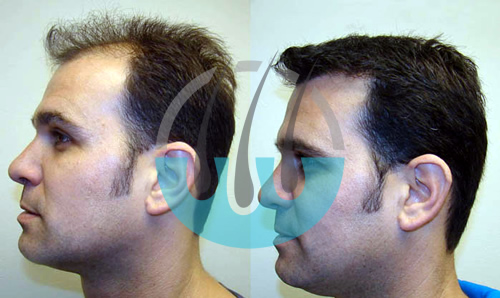
A second hair transplant may also be considered for:
- Insufficient density after the first hair transplant
- Progressive crown or vertex thinning
- Continued thinning through the mid-scalp
- Refinement of a previous hairline
- Low density from an earlier procedure
- A hairline that appears too high or uneven
- Grafts positioned at undesirable angles
- Areas where growth was limited
- Hair transplant repair
- Patients seeking additional overall density
Therefore, needing a second hair transplant does not necessarily mean that the first procedure failed.
For some patients, multiple procedures may form part of a long-term hair restoration strategy from the beginning.
When Should You Have a Second Hair Transplant?
One of the most important questions is:
How long should you wait before having a second hair transplant?
In general, it is important to allow enough time to evaluate the outcome of the first procedure before planning another operation.
Temporary shedding can occur during the early stages after hair transplantation. New hair typically begins appearing over the following months, with density gradually improving as the transplanted hairs mature.
Crown results can sometimes develop more slowly than results in the frontal area.
For this reason, approximately 12 months is often considered an important point for evaluating the overall result of the first procedure.
In some crown cases, maturation may continue for 15–18 months.
The ideal timing for a second hair transplant varies from patient to patient.
Planning another operation only a few months after the first because the density appears insufficient may therefore be premature.
The transplanted area and donor region should be allowed to heal and develop sufficiently before the next procedure is planned.
Is 6 Months Long Enough for a Second Hair Transplant?
This is a common question among patients.
In many cases, six months can still be too early to evaluate the final result of the first hair transplant.
By the sixth month, a significant amount of new growth may already be visible, but the hair can continue to mature, thicken and increase in visual density.
Therefore, if the main purpose of a second procedure is simply to increase density, it may be advisable to wait longer before making a final decision.
There may be specific circumstances in which a different medical plan is appropriate.
Every patient should therefore be evaluated individually.
Should You Wait 12 Months Before a Second Hair Transplant?
For many patients, 12 months provides a more appropriate period for evaluating the first procedure.
At this stage:
- The majority of transplanted hair growth can be assessed
- Overall density is easier to evaluate
- Healing of the donor area can be reviewed
- Progression of native hair loss can be observed
- Areas requiring a second procedure can be identified more accurately
It is important to remember that crown results may take longer to mature.
Therefore, the timing of a second hair transplant should be determined not simply by the number of months that have passed but by the actual condition of the transplanted and donor areas.
How Many Grafts Are Needed for a Second Hair Transplant?
The number of grafts required for a second hair transplant depends largely on the area being treated.
There is no single graft number suitable for every patient.
For example, a patient who only wants additional frontal hairline density will have very different requirements from someone seeking coverage of a large crown area.
In some second procedures, approximately 1,000–1,500 grafts may be sufficient.
Other patients may require 2,000–3,000 grafts.
Higher graft numbers may be considered in patients with extensive hair loss and suitable remaining donor capacity.
However, when determining the graft number for a second hair transplant, the most important limitation is not simply the size of the recipient area.
The remaining safe donor capacity must also be considered.
Are 2,000 Grafts Enough for a Second Hair Transplant?
Two thousand grafts may provide a meaningful improvement in selected areas.
For example, this number may be considered for:
- Strengthening the frontal hairline
- Increasing density in the frontal region
- Treating localised thinning in the mid-scalp
- Adding coverage to a small or medium-sized crown
However, 2,000 grafts should not be expected to provide high-density coverage across a large Norwood 6 or Norwood 7 area.
The number of grafts is important, but where and how those grafts are distributed is equally significant.
Can You Have 3,000 Grafts in a Second Hair Transplant?
If the remaining donor capacity is suitable, 3,000 grafts or more may be possible during a second hair transplant.
However, if a large number of grafts were already extracted during the first procedure, extracting a similar number again may not be safe or appropriate.
For example, a patient who previously had 4,000–4,500 grafts extracted should have the remaining donor supply carefully assessed.
Hair thickness, donor density, scalp characteristics, previous extraction patterns and the possibility of future hair loss should all be considered.
For this reason, being promised a very high graft number for a second procedure should not automatically be viewed as an advantage.
Is the Donor Area Good Enough for a Second Hair Transplant?
Donor area assessment is one of the most important parts of planning a second hair transplant.
A significant number of grafts may already have been extracted from the back and sides of the scalp during the first operation.
The density and overall appearance of the donor region must therefore be evaluated before another procedure.
Excessive extraction can leave the donor area looking thin or patchy.
This is known as overharvesting.
The objective of a second hair transplant should not be to extract as many grafts as possible. Instead, the aim should be to determine an appropriate number of grafts while preserving the donor area as much as possible.
It is also important to consider whether a third hair transplant may be needed in the future.
Long-term management of the donor supply is therefore essential.
Can You Have a Second Hair Transplant with a Weak Donor Area?
In some cases, yes.
Having a weak donor area does not automatically mean that a second hair transplant is impossible.
However, the scope of the procedure may need to be reduced.
Instead of attempting to cover every area of hair loss, the treatment may focus on a cosmetically important region such as the frontal area or crown.
In suitable patients, beard hair may also be evaluated as an additional donor source.
In more selected cases, suitable body hair may be considered through Body Hair Transplantation (BHT).
Can Beard Hair Be Used for a Second Hair Transplant?
Yes.
Beard hair can be an important additional donor source, particularly for patients whose scalp donor reserves have been reduced by previous procedures.
Suitable grafts are commonly assessed from underneath the chin and around the neck.
Because beard hair can be thicker than scalp hair, it may contribute to visual density when used appropriately.
However, beard grafts are generally not the first choice for creating a soft and natural frontal hairline.
Instead, they may be combined with scalp grafts in areas such as the mid-scalp or crown when appropriate.
Can a Second Hair Transplant Be Performed on the Crown?
Yes.
A significant number of second hair transplant procedures are performed to improve the crown or vertex.
During the first operation, the frontal hairline and frontal region are often prioritised.
If donor capacity is limited, the crown may not be fully treated during the first session.
A second hair transplant can then potentially focus on the crown.
One important consideration is that the crown can represent a relatively large surface area.
The natural whorl pattern must also be recreated carefully, making the direction and placement of grafts particularly important.
Large crown areas can require substantial numbers of grafts.
For patients with limited donor reserves, a strategic balance between frontal density and crown coverage is essential.
FUE or DHI for a Second Hair Transplant?
Both FUE and DHI approaches may be considered during a second hair transplant.
FUE refers to the method used to extract individual follicular units from the donor region.
DHI generally refers to the implantation of extracted grafts using implanter pens.
DHI may be considered in certain cases where additional density is required between existing hairs.
However, the best technique depends on more than simply whether this is the patient’s second procedure.
The size of the recipient area, existing hair density, graft requirements, donor condition and overall objective of the operation should all be considered.
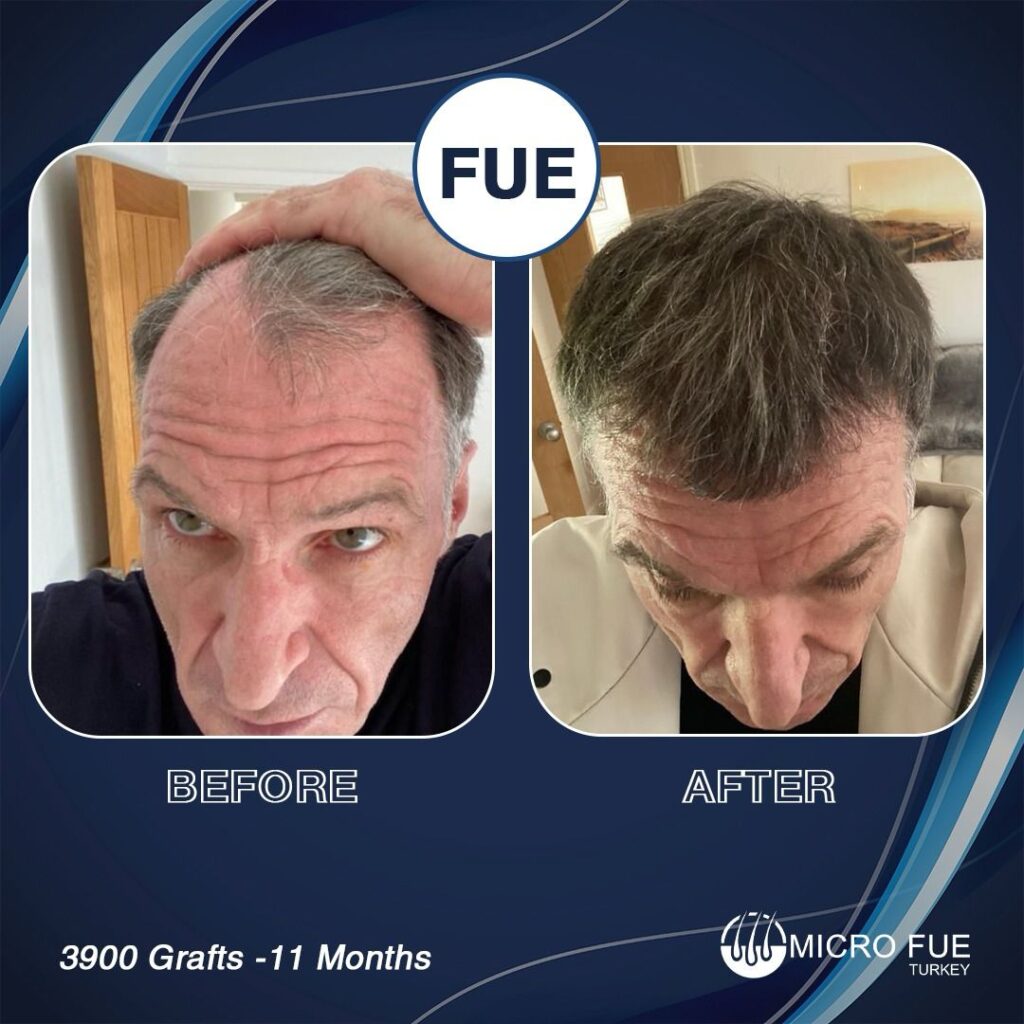
Can the Hairline Be Changed During a Second Hair Transplant?
In selected patients, yes.
After the first procedure, the hairline may appear too high, asymmetrical or unsuitable for the patient’s facial proportions.
A second hair transplant may potentially be used to refine or redesign certain parts of the hairline.
However, lowering the hairline significantly can require a large number of grafts.
Future hair loss must also be considered.
Creating an excessively low hairline can consume valuable donor reserves and may appear less natural as the patient gets older.
A long-term approach is therefore important when designing or modifying a hairline.
Can a Failed Hair Transplant Be Corrected with a Second Procedure?
Some unsatisfactory or failed hair transplant results may potentially be improved with another procedure.
Problems that may be evaluated include:
- Low density
- Untreated gaps
- Irregular hairline design
- Grafts growing at undesirable angles
- Insufficient crown coverage
However, not every unsuccessful hair transplant can be corrected in the same way.
The amount of donor hair previously used and the condition of the recipient skin can significantly influence the available options.
Hair transplant repair procedures therefore require particularly careful planning.
How Much Does a Second Hair Transplant Cost in Turkey?
The cost of a second hair transplant in Turkey cannot be represented by one universal fixed price.
Several factors can affect the final cost:
- Number of grafts required
- FUE or DHI technique
- Whether corrective work is required
- Whether beard or BHT donor hair is needed
- Duration and complexity of the procedure
- Experience of the clinic and medical team
- Whether accommodation and transfers are included
A second hair transplant may sometimes be a smaller procedure because fewer grafts are required.
However, certain corrective cases can be more complex and may require more detailed planning.
For this reason, an accurate price should normally be provided after evaluating current photographs and the patient’s previous hair transplant history.
Why Choose Turkey for a Second Hair Transplant?
Turkey has been one of the world’s leading destinations for international hair transplant patients for many years.
Hair transplant services for international patients are widely available in Istanbul, Antalya and other major destinations.
Patients considering a second hair transplant in Turkey may look at factors such as:
- High volume of FUE and DHI procedures
- Teams experienced with international patients
- Hair transplant and accommodation packages
- Airport transfer arrangements
- Competitive costs compared with many European countries
- Availability of centres experienced in second and repair procedures
However, choosing a clinic based only on price is not advisable.
For a second hair transplant in particular, protecting the remaining donor supply may be more important than pursuing the highest possible graft number.
When Will You See Results from a Second Hair Transplant?
The general recovery and hair growth process is similar to that of the first hair transplant.
Crusting and redness may occur during the early stages.
Many of the transplanted hair shafts may shed during the first weeks. This is commonly part of the normal post-transplant process.
New growth typically begins over the following months.
Initial visible changes may appear within several months, while density and hair shaft thickness generally continue to improve over time.
For many patients, the overall result can be evaluated at approximately 12 months.
Crown results may require additional time to mature.
Is a Second Hair Transplant Successful?
The potential success of a second hair transplant depends on several factors.
Important considerations include:
- Quality of the donor area
- Number of usable grafts
- Condition of the first transplant
- Size of the recipient area
- Hair characteristics
- Progression of natural hair loss
- Surgical planning
- Realistic expectations
A second procedure is not simply a repetition of the first hair transplant.
If donor reserves have already been reduced, a more strategic approach is required.
Will You Need a Third Hair Transplant?
Some patients may eventually require or consider a third procedure.
This may be more relevant for younger patients with advanced or progressive hair loss.
For these patients, hair restoration can become a long-term process involving multiple procedures.
The possibility of a future third hair transplant should therefore be considered when planning the second operation.
Using the entire remaining donor supply during one procedure may not always be the best strategy.
Because natural hair loss can continue over time, preserving some donor capacity for future treatment may be important.
What Photos Are Needed for a Second Hair Transplant Assessment?
A single frontal selfie is not sufficient for a detailed second hair transplant assessment.
For a more accurate preliminary evaluation, clear photographs should ideally show:
- Frontal hairline
- Top of the scalp
- Crown / vertex
- Back donor area
- Right donor area
- Left donor area
Patients should also provide the approximate date of their previous hair transplant and, if known, the number of grafts transplanted during that procedure.
If beard donor hair is being considered, clear photographs underneath the chin and around the neck can also be included.
Conclusion: Planning Is More Important Than Graft Numbers in a Second Hair Transplant in Turkey
A second hair transplant may be considered for patients whose natural hair loss has continued after their first procedure, who want additional density, who have developed crown thinning, or who require improvement of a previous hair transplant.
However, the potential success of another operation is not determined solely by achieving a high graft number.
One of the most important factors is careful management of the remaining donor supply.
When planning a second hair transplant, the number of grafts used during the first procedure, current donor condition, progression of hair loss and the possibility of requiring a third operation in the future should all be considered.
For some patients, 1,500–2,000 grafts may be sufficient. Others may require 3,000 grafts or more. In some cases, however, limited safe donor capacity may make a smaller and more strategically focused procedure the more appropriate option.
At Micro FUE Turkey, a preliminary assessment for a second hair transplant should consider the result of the previous procedure, current hair loss, crown condition and remaining donor area together.
If you have already undergone a hair transplant, you can provide current photographs together with the date of your previous procedure for an individual preliminary assessment of your potential graft requirements and second hair transplant treatment plan.