
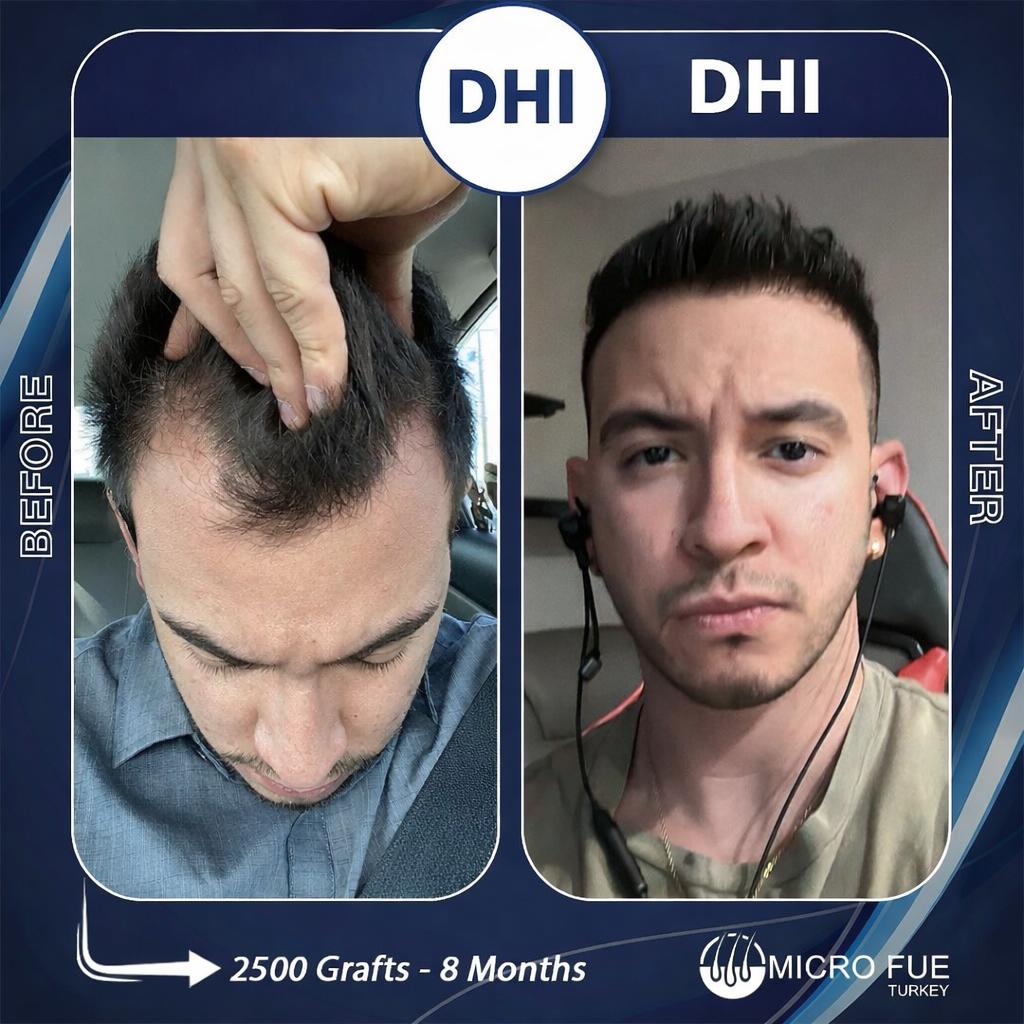
Crown Hair Transplant Turkey: Grafts, Cost & Results 2026
A crown hair transplant in Turkey is one of the most commonly considered hair restoration procedures for men experiencing thinning or baldness at the back and top of the scalp. The crown, also known as the vertex, can be one of the most challenging areas to restore because of its large surface area, circular growth pattern and potentially high graft requirements.
Some patients develop crown thinning while maintaining a relatively strong frontal hairline. Others first experience frontal recession and later notice progressive thinning across the mid-scalp and crown. There are also patients who have already undergone a first hair transplant to restore the frontal region and return several years later specifically for a second hair transplant targeting the crown.
So, how many grafts are needed for a crown hair transplant?
How much does a crown hair transplant cost in Turkey?
Are 1,500, 2,000 or 3,000 grafts enough for the crown?
When will crown hair transplant results become visible?
And should you choose FUE or DHI for crown restoration?
This 2026 guide explains the most important factors affecting crown hair transplant cost in Turkey, graft numbers, donor capacity, FUE and DHI techniques, recovery and long-term results.
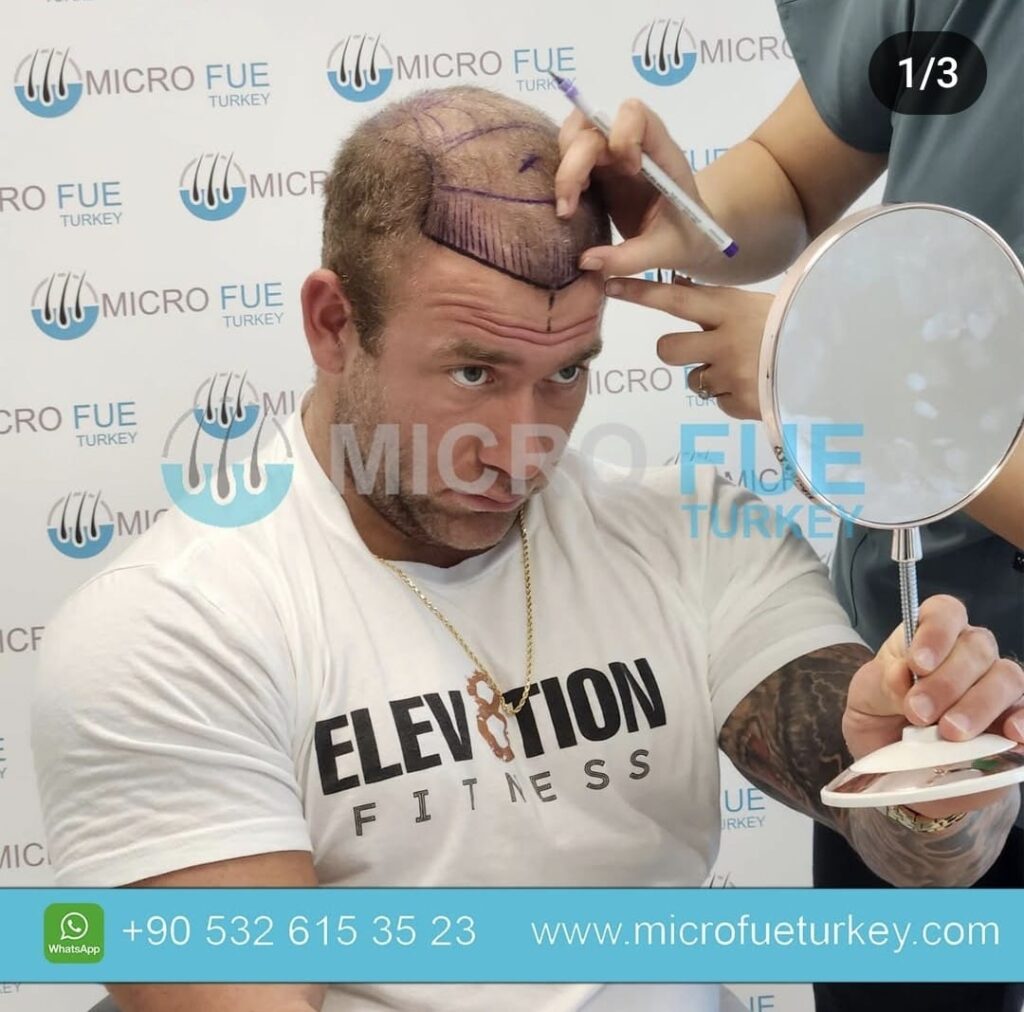
What Is a Crown Hair Transplant?
A crown hair transplant is a hair restoration procedure designed to increase hair coverage in the crown or vertex region of the scalp.
The crown is located toward the upper back portion of the scalp. Unlike the frontal hairline, where hairs generally follow a forward direction, crown hairs usually form a circular or spiral pattern known as the hair whorl.
This natural pattern is extremely important when planning crown transplantation.
Simply placing grafts vertically or randomly into the crown may create an unnatural appearance. The direction and angle of the existing hairs should be evaluated so that transplanted grafts can follow the patient’s natural crown pattern as closely as possible.
The objective is therefore not simply to place a large number of grafts into an empty area.
A successful crown hair transplant requires careful planning of:
- Graft direction
- Hair angles
- Existing native hair
- Crown size
- Donor capacity
- Desired density
- Future hair loss
- Natural whorl pattern
Why Does the Crown Lose Hair?
One of the most common causes of crown thinning in men is androgenetic alopecia, commonly known as male pattern hair loss.
Hair loss may progress gradually.
A patient may initially notice recession around the temples or frontal hairline. Over time, thinning can become more noticeable through the mid-scalp and crown.
In other patients, crown thinning becomes noticeable relatively early.
The important point is that hair loss can continue progressing even after a hair transplant.
Transplanted follicles and existing native hairs are not necessarily affected in the same way. Therefore, long-term planning is particularly important when considering a crown hair transplant.
A crown that appears relatively small today may become larger if surrounding native hair continues to thin.
Why Is Crown Hair Transplantation More Challenging?
Crown restoration presents several unique challenges.
The first is surface area.
Even a crown that appears relatively small in photographs can represent a significant number of square centimetres when measured accurately.
The second challenge is the whorl pattern.
Hair grows in different directions around the centre of the crown. Recreating this pattern requires careful attention to graft angle and direction.
The third challenge is donor management.
The crown can consume a substantial number of grafts. This becomes particularly important for patients who also have frontal and mid-scalp hair loss.
If too many grafts are allocated to the crown, there may not be enough donor supply available to maintain or restore cosmetically more prominent areas in the future.
This is why crown transplantation should be considered as part of a complete long-term hair restoration plan.
How Many Grafts Are Needed for a Crown Hair Transplant?
There is no universal graft number for crown restoration.
The required number depends on several factors:
- Size of the crown
- Degree of thinning
- Existing native hair
- Hair shaft thickness
- Number of hairs per follicular unit
- Donor density
- Hair colour and skin contrast
- Desired visual density
- Previous hair transplant procedures
- Future hair loss expectations
A small area of crown thinning may require considerably fewer grafts than a completely bald and expanding vertex.
In clinical literature, crown/vertex transplantation has involved very different graft numbers depending on the area being treated and the individual patient’s circumstances.
For this reason, a reliable graft estimate should be made after examining clear photographs and ideally measuring the recipient area.
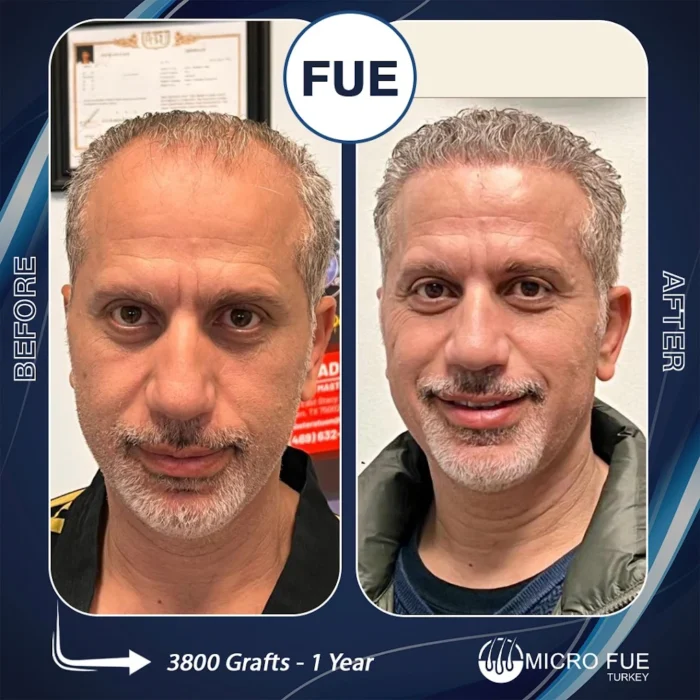
Are 1,500 Grafts Enough for the Crown?
For some patients, 1,500 grafts may provide useful improvement.
This may be particularly relevant when:
- The crown area is relatively small
- Existing native hair is still present
- The objective is to increase visual density rather than completely reconstruct a bald crown
- The patient has thick hair shafts
- The donor area needs to be conserved
However, 1,500 grafts may not be sufficient for a large, completely bald crown.
The same number of grafts can produce very different visual results in different patients.
For this reason, graft count should never be considered independently from crown size and hair characteristics.
Are 2,000 Grafts Enough for a Crown Hair Transplant?
2,000 grafts for a crown hair transplant is a commonly researched number.
For a small to moderate crown, 2,000 grafts may potentially create a significant cosmetic improvement.
However, the result depends heavily on the size of the recipient area.
If those 2,000 grafts are distributed across a relatively compact crown, the visual density may be considerably stronger than if the same number is spread across a large vertex.
Existing hair also matters.
A thinning crown containing significant native hair may require fewer grafts to create the appearance of improved density than a completely bald crown.
Therefore, the question should not simply be:
“Are 2,000 grafts enough?”
A better question is:
“How large is my crown, how much native hair remains and what density can realistically be achieved with 2,000 grafts?”
What About 2,500 or 3,000 Grafts for the Crown?
Larger crown areas may require 2,500–3,000 grafts or potentially more, depending on the individual case.
Published clinical experience demonstrates how variable these requirements can be. One retrospective analysis of advanced hair-loss cases reported an average of approximately 2,770 follicular units for patients treated specifically for vertex coverage.
This should not be interpreted as a universal target.
Some patients require considerably fewer grafts, while others may require more.
Most importantly, the number must remain compatible with the patient’s available donor supply.
Using 3,000 grafts in the crown may be technically possible in one patient but strategically inappropriate in another who also has progressive frontal and mid-scalp hair loss.
How Is Crown Graft Density Calculated?
One way to estimate graft requirements is to measure the recipient area in square centimetres and consider the planned follicular-unit density.
However, density is not the only factor determining the visual result.
Hair characteristics are extremely important.
Thicker hair can generally provide greater visual coverage than very fine hair.
Curly or wavy hair may create a different coverage effect compared with straight hair.
The number of hairs within each follicular unit also influences the result.
Skin-to-hair colour contrast can further affect how visible the scalp appears.
This is why two patients receiving exactly 2,000 grafts can achieve noticeably different cosmetic outcomes.
Crown Hair Transplant and the Natural Whorl
One of the most important technical aspects of crown restoration is recreating the natural whorl.
The crown does not have a single straight direction of growth.
Instead, the hairs rotate around a central point and gradually change direction.
The precise pattern differs between individuals.
Before implantation, the existing crown should therefore be examined carefully to identify the natural direction of the patient’s hair.
Recipient sites can then be planned to follow this pattern.
Correct graft direction is particularly important because even a dense crown can look unnatural if the transplanted hairs grow in incorrect directions.
Crown Hair Transplant FUE in Turkey
FUE crown hair transplant in Turkey is one of the most commonly used approaches for vertex restoration.
During FUE, follicular units are individually extracted from the donor area, typically from the back and sides of the scalp.
The grafts are then prepared for transplantation into the crown.
Recipient sites are created according to the planned density, direction and natural crown pattern before the grafts are implanted.
The number of grafts that can safely be extracted depends on the patient’s donor density and previous surgical history.
For patients who have already undergone one or more FUE procedures, remaining donor capacity becomes particularly important.
DHI Crown Hair Transplant in Turkey
DHI may also be considered for crown transplantation in selected patients.
With DHI, extracted grafts are implanted using implanter devices.
This approach may be considered when working between existing native hairs or when a particular implantation strategy is required.
However, patients should not assume that DHI automatically produces a better crown result than FUE.
The potential result depends on factors such as:
- Donor quality
- Graft survival
- Crown size
- Hair characteristics
- Existing hair
- Implantation direction
- Graft distribution
- Long-term hair-loss planning
The most appropriate approach should therefore be selected according to the individual patient rather than simply choosing a technique based on its name.
FUE vs DHI for Crown Hair Transplant: Which Is Better?
There is no universal answer.
Both approaches may be suitable depending on the patient’s circumstances.
For a large bald crown requiring substantial coverage, one implantation strategy may be preferred.
For a thinning crown where grafts need to be positioned between existing hairs, another approach may be considered.
Instead of asking only “FUE or DHI?”, patients should focus on more important questions:
How many grafts does my crown actually need?
How strong is my donor area?
Is my crown hair loss still progressing?
How should the natural whorl be reconstructed?
Will I need donor grafts for other areas in the future?
These questions are usually more important to long-term planning than the marketing name of the technique.
Crown Hair Transplant After a Previous Hair Transplant
Many patients seeking crown restoration have already undergone a previous frontal hair transplant.
This is common because frontal restoration is often prioritised during the first procedure.
The frontal hairline has a major effect on facial framing and overall appearance, while the crown may require a large number of additional grafts.
A typical long-term strategy for selected patients may therefore involve:
First procedure: frontal hairline and frontal/mid-scalp restoration.
Second procedure: crown restoration or additional density.
However, this strategy must be individualised.
Before a second crown hair transplant, the remaining donor area must be assessed carefully.
Can You Have a Crown Hair Transplant with a Weak Donor Area?
Potentially, but the treatment plan may need to be modified.
The crown is particularly challenging when donor capacity is limited because a large vertex can consume many grafts.
Instead of attempting maximum density, the objective may become achieving strategic visual coverage.
For selected patients with insufficient scalp donor reserves, beard hair may also be evaluated as an additional donor source.
In more specialised cases, suitable body hair may potentially be considered through Body Hair Transplantation (BHT).
However, beard and body hair have different characteristics from scalp hair and should not automatically be treated as direct substitutes.
Beard Hair for Crown Hair Transplant
Beard grafts can be particularly useful in selected patients requiring additional coverage.
Beard hair is often thicker than scalp hair and may therefore contribute to visual density.
However, because its characteristics differ from scalp hair, careful placement is important.
In suitable cases, beard grafts may be mixed with scalp grafts deeper within the crown rather than being treated as identical to scalp follicles.
The availability of beard grafts depends entirely on the patient’s beard density and individual characteristics.
How Much Does a Crown Hair Transplant Cost in Turkey in 2026?
The crown hair transplant cost in Turkey varies according to the individual treatment plan.
There is no single price that accurately represents every crown procedure.
Factors affecting the price may include:
- Number of grafts required
- Size of the crown
- FUE or DHI approach
- Donor-area condition
- Whether this is a first or second hair transplant
- Need for beard or body donor grafts
- Complexity and duration of surgery
- Clinic and medical team
- Accommodation and transfer package
A patient requiring 1,500 grafts for a small thinning crown has very different treatment requirements from a patient needing extensive vertex reconstruction after a previous hair transplant.
For this reason, an accurate crown hair transplant price should be based on an individual assessment rather than graft number alone.
Crown Hair Transplant Turkey vs UK and Europe
Cost is one of the reasons international patients research hair transplantation in Turkey.
Hair transplant packages in Turkey may combine the procedure with services such as accommodation and transfers, depending on the provider.
However, cost should not be the only factor when comparing Turkey with the UK or other European destinations.
For crown transplantation in particular, patients should evaluate the treatment plan, donor management, graft requirements and long-term strategy.
An inexpensive procedure that unnecessarily exhausts the donor area can create problems that are difficult to correct later.
Crown Hair Transplant Recovery
The initial recovery process is generally similar to other scalp hair transplant procedures.
During the first days, patients may experience redness, mild swelling or crusting around the transplanted area.
The small crusts gradually resolve during the early healing period.
The transplanted hair shafts may subsequently shed.
This does not necessarily mean that the follicles have been lost.
New growth generally begins gradually over the following months.
Patients should follow the postoperative instructions provided by their medical team regarding washing, sleeping position, physical activity and protection of the transplanted area.
When Does Crown Hair Transplant Growth Start?
New growth does not appear immediately after the operation.
The transplanted hair shafts commonly undergo a shedding phase before new growth begins.
Early new hairs may become visible over the following months.
The crown is often considered an area where visual maturation can take longer.
Patients should therefore avoid judging the final result too early.
Crown Hair Transplant Results at 3, 6, 9 and 12 Months
3 Months
At approximately three months, the crown may still look relatively thin. Early new hairs may only just be beginning to appear.
6 Months
By around six months, more visible growth may be present. However, the result should still not necessarily be considered final.
9 Months
At approximately nine months, density and coverage may become considerably easier to evaluate.
Hair shafts can continue to mature and thicken.
12 Months
For many patients, the 12-month point provides a much clearer indication of the overall result.
However, some crown results may continue maturing beyond this stage.
Individual growth rates vary.
Why Does Crown Hair Transplant Growth Seem Slower?
Patients frequently compare their crown results with their frontal hairline.
This can be misleading.
The crown has different anatomical and visual characteristics, including its circular growth pattern and the way light reaches the scalp.
It can therefore appear less dense even when a meaningful number of grafts have grown.
Patience is particularly important when assessing crown transplantation.
Is Crown Hair Transplant Permanent?
Hair follicles obtained from an appropriate stable donor region are selected because of their relative resistance to androgenetic hair loss.
However, a hair transplant does not stop the progression of hair loss in the patient’s remaining native hair.
This distinction is extremely important.
A successfully transplanted crown can still develop a thinner appearance in the future if surrounding non-transplanted hairs continue to miniaturise and fall.
Patients should therefore discuss the long-term management of ongoing hair loss with an appropriately qualified clinician.
Is Crown Hair Transplant Worth It?
For suitable candidates, crown restoration can create a significant cosmetic improvement.
Patients who are bothered by a visible bald spot, thinning vertex or scalp visibility from above may benefit from improved crown coverage.
However, whether the procedure is worthwhile depends on:
- Crown size
- Donor capacity
- Age
- Progression of hair loss
- Condition of the frontal and mid-scalp regions
- Expected density
- Available grafts
- Realistic expectations
For some patients, frontal restoration should be prioritised before the crown.
For others, particularly those with an already restored frontal region, the crown may be the logical next stage.
Who Is a Good Candidate for Crown Hair Transplant in Turkey?
A suitable candidate may have:
- Stable or reasonably predictable crown hair loss
- Sufficient donor capacity
- Realistic expectations
- A visible crown or vertex area requiring restoration
- Healthy scalp condition
- Understanding of the gradual growth process
Patients with diffuse thinning involving the supposed donor region require particularly careful assessment because donor stability should not simply be assumed.
What Photos Are Needed for a Crown Hair Transplant Assessment?
For an initial online evaluation, clear photographs should ideally include:
- Crown directly from above
- Crown from the back
- Entire top of the scalp
- Frontal hairline
- Back donor area
- Right donor area
- Left donor area
Photographs should be taken in good lighting without hair fibres, concealers or styling products hiding the scalp.
If the patient has undergone a previous hair transplant, the date and approximate graft number should also be provided.
Conclusion: Crown Hair Transplant in Turkey Requires Strategic Graft Planning
A crown hair transplant in Turkey can potentially restore coverage to one of the most challenging areas of the scalp.
However, successful crown restoration is not simply about implanting the highest possible number of grafts.
The crown’s size, natural whorl pattern, existing hair, donor capacity, future hair loss and overall scalp restoration strategy must all be considered.
For one patient, 1,500–2,000 grafts may provide a meaningful improvement.
Another patient may require 2,500–3,000 grafts or more.
A patient with limited donor reserves may instead benefit from a more conservative approach designed to create visual coverage while preserving grafts for the future.
This is especially important for patients considering a second hair transplant in Turkey after previously restoring their frontal hairline.
At Micro FUE Turkey, preliminary crown hair transplant assessment should include both the recipient area and the donor region. Patients who have undergone previous procedures should also provide information about their earlier surgeries so that remaining donor capacity can be considered.
Current photographs showing the crown, entire scalp and donor region can be used for an initial assessment of potential graft requirements and treatment planning.