
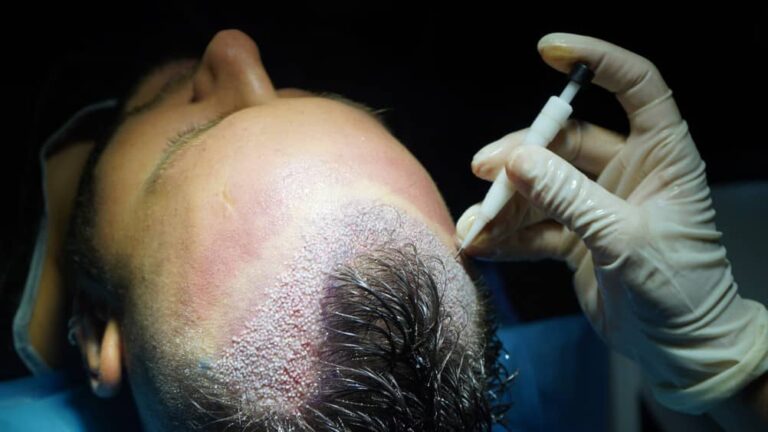
Hair Transplant for Receding Hairline: Grafts, Cost & Results
A hair transplant for a receding hairline can restore the frontal frame of the face, improve thinning temples and create a younger but still natural-looking appearance. For many men, the first visible sign of male pattern hair loss is not complete baldness but a gradual movement of the frontal hairline backwards, often beginning at the temples and progressing into an M-shaped pattern.
Because the frontal hairline is the first part of the hair that people notice, even a relatively limited transplant can create a significant cosmetic change.
However, successful receding hairline hair transplant results depend on much more than simply filling the empty areas with as many grafts as possible.
The medical team must consider the patient’s age, current Norwood pattern, donor density, hair calibre, future hair loss, temple recession, forehead proportions and long-term donor supply before designing the new hairline.
So how many grafts are needed for a receding hairline?
Is 1,500 grafts enough?
When are 2,000 or 2,500 grafts required?
Is FUE or DHI better for hairline restoration?
How much does a receding hairline transplant cost in Turkey?
And most importantly, will the transplanted hairline look natural as the patient gets older?
This 2026 guide explains receding hairline transplantation, graft numbers, FUE, DHI, temple restoration, cost, recovery, density and expected results.
What Is a Receding Hairline?
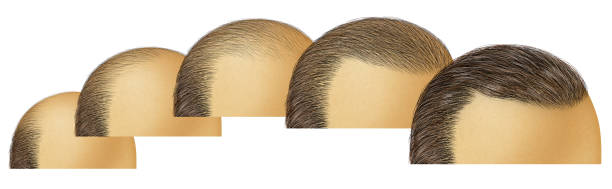
A receding hairline occurs when the frontal hairline gradually moves backwards.
It commonly begins around the temporal corners and can gradually develop into a more noticeable M-shaped pattern.
In male pattern hair loss, this progression is often associated with androgenetic alopecia.
Some patients initially notice only slight temple recession.
Others may experience:
- Deep temporal recession
- A higher forehead
- M-shaped hair loss
- Frontal thinning
- Loss of the central frontal hairline
- Combined frontal and mid-scalp thinning
The pattern and speed of progression vary significantly between patients.
This is why a hair transplant should not simply recreate the patient’s teenage hairline without considering how future hair loss may develop.
Can a Hair Transplant Fix a Receding Hairline?
Yes. Hair transplantation is commonly used to restore a receding frontal hairline in suitable patients.
Healthy follicular units are extracted from a stable donor region, usually at the back and sides of the scalp, and transplanted into the receded frontal and temporal areas.
The objective is not simply to move the hairline forward.
A successful procedure should create a hairline that:
- Frames the face naturally
- Matches the patient’s age
- Works with the available donor supply
- Looks natural from close range
- Has appropriate direction and angles
- Can remain aesthetically balanced if future hair loss continues
Hairline design is one of the most technically and aesthetically important stages of hair transplantation.
An unnaturally low or perfectly straight hairline can become obvious as the patient gets older.
How Many Grafts Are Needed for a Receding Hairline?
One of the most common questions is:
How many grafts do I need for a receding hairline?
There is no universal answer.
The number of grafts depends on:
- Degree of recession
- Width of the forehead
- Depth of the temporal corners
- Desired hairline position
- Existing frontal hair
- Hair shaft thickness
- Donor density
- Hair colour and skin contrast
- Desired cosmetic density
- Future hair-loss pattern
A relatively small hairline correction may require fewer grafts than a full frontal reconstruction.
In general, patients may fall into several broad treatment categories.
1,000–1,500 Grafts
This range may be considered for selected patients with limited temporal recession or a small frontal correction.
It may be suitable when the central hairline is still strong and only the corners require reconstruction.
1,500–2,000 Grafts
This is commonly considered for more noticeable recession involving both temples and part of the frontal hairline.
It may provide meaningful restoration when the treatment area remains relatively limited.
2,000–2,500 Grafts
Patients with deeper recession, an M-shaped hairline or more extensive frontal thinning may require approximately this level of graft planning.
2,500–3,000+ Grafts
More advanced frontal hair loss combined with mid-scalp thinning can require larger numbers.
However, these figures are planning examples rather than fixed medical rules.
The final number should always be determined after examination of the donor and recipient areas.
Are 1,500 Grafts Enough for a Receding Hairline?
For some patients, yes.
A 1,500 graft hair transplant for a receding hairline can provide a significant improvement when the area requiring restoration is relatively small.
For example, a patient with a strong central frontal forelock but moderate recession at both temples may be able to concentrate the available grafts into the corners and frontal transition zone.
This can create a major visual improvement without using an unnecessarily high number of donor grafts.
However, 1,500 grafts may not be enough for a patient with deep temporal recession, significant frontal thinning and a large forehead.
The treatment area is more important than the advertised graft number.
Is 2,000 Grafts Enough for a Receding Hairline?
A 2,000 graft hair transplant is frequently discussed for frontal hair restoration because it can provide useful coverage in many moderate cases.
Two thousand grafts may potentially allow the team to:
- Restore temporal corners
- Strengthen the central hairline
- Add density behind the hairline
- Improve an M-shaped recession pattern
But the visual result depends heavily on hair characteristics.
Thick, wavy or curly hair may provide stronger coverage than very fine, straight hair using the same number of grafts.
This is why comparing before-and-after photographs based only on graft numbers can be misleading.
When Are 2,500 or 3,000 Grafts Needed?
A patient with a more advanced receding hairline may require 2,500 to 3,000 grafts or more, particularly when the transplant extends from the frontal hairline into the frontal third or mid-scalp.
For example, patients may require more grafts if they have:
- Deep temple recession
- A completely weakened frontal hairline
- Large frontal bald areas
- Combined frontal and mid-scalp thinning
- Fine-calibre hair
- A desire for stronger frontal cosmetic density
The donor supply must always be considered before committing large numbers of grafts to the frontal zone.
Hair transplantation involves redistribution of a limited donor resource.
Receding Hairline and the Norwood Scale
The Norwood scale is commonly used to describe patterns of male pattern hair loss.
Patients with early recession may resemble Norwood 2 patterns, while more pronounced temple and frontal loss may progress toward Norwood 3 and beyond.
However, the Norwood scale alone does not determine the graft number.
Two patients classified at a similar stage may have very different:
- Head sizes
- Hairline widths
- Donor density
- Hair thickness
- Hair texture
- Frontal area measurements
Therefore, graft planning must remain individual.
Hairline Transplant for Norwood 2
Patients with a Norwood 2 receding hairline often have relatively limited temporal recession.
In carefully selected patients, this can be an excellent opportunity for a conservative hairline restoration.
However, younger patients require particular caution.
If future male pattern hair loss is likely, lowering the hairline aggressively can consume donor grafts and potentially create an unnatural appearance later.
The goal should be a mature, age-appropriate hairline rather than recreating an adolescent hairline.
Hair Transplant for Norwood 3 Receding Hairline
A Norwood 3 hair transplant generally involves more significant temporal recession and often requires a larger treatment area.
The new hairline may need reconstruction across:
- Left temple
- Right temple
- Frontal transition zone
- Central frontal region
- Areas immediately behind the hairline
Depending on individual anatomy, graft needs can become substantially higher than in a small Norwood 2 correction.
Temple Hair Transplant for Receding Hairline
Temple recession plays a major role in the appearance of a receding hairline.
Rebuilding the temporal corners can transform an M-shaped hairline into a more balanced frontal frame.
However, temple transplantation requires careful control of:
- Hair direction
- Implantation angle
- Density
- Graft selection
- Transition into native hair
The hairs in the temple region naturally grow at acute angles.
If transplanted too upright, they may look unnatural even if the grafts grow successfully.
Hair direction is therefore just as important as graft survival.

How Is a Natural Hairline Designed?
The best hairline is not necessarily the lowest hairline.
A natural hairline should complement:
- Facial proportions
- Forehead height
- Patient age
- Existing hair pattern
- Temporal recession
- Future hair-loss risk
- Donor availability
A natural frontal border should also avoid looking mechanically straight.
Small irregularities and carefully arranged single-hair grafts can help create a softer transition.
The most frontal area is generally designed differently from the denser zones immediately behind it.
This helps prevent a plug-like appearance.
Why Are Single-Hair Grafts Important in the Hairline?
Follicular units can contain one, two, three or sometimes more hairs.
The front edge of the hairline generally requires careful use of single-hair follicular units.
If larger multi-hair grafts are placed directly along the leading edge, the result may appear coarse or artificial.
Behind this softer transition, two- and three-hair grafts can be used strategically to increase visual density.
This combination helps create both naturalness and coverage.
FUE Hair Transplant for Receding Hairline
FUE hair transplant for a receding hairline is one of the most commonly requested approaches.
During FUE, follicular units are extracted individually from the donor area.
They are then implanted into the frontal recipient region according to the planned hairline design.
FUE can be particularly suitable for:
- Temple recession
- Frontal hairline restoration
- M-shaped hairlines
- Hairline lowering in selected patients
- Frontal density improvement
Because extraction is distributed across the donor region, FUE does not create the same linear donor scar associated with strip harvesting.
However, excessive extraction can still produce visible donor thinning.
Safe donor management therefore remains essential.
DHI Hair Transplant for Receding Hairline
DHI hair transplant for receding hairline restoration may also be considered.
In many DHI procedures, grafts are still extracted individually using FUE principles.
The main difference is that the grafts are implanted using implanter pens.
DHI may be particularly useful in selected cases involving:
- Small hairline corrections
- Existing frontal hairs
- Density enhancement
- Targeted implantation
- Partial or limited-shave procedures
However, DHI does not automatically create a more natural or denser hairline.
The result still depends on design, graft handling, direction, donor quality and the experience of the medical team.
FUE vs DHI for Receding Hairline
When comparing FUE vs DHI for a receding hairline, there is no universal winner.
FUE with pre-created recipient sites can be highly effective for complete frontal reconstruction.
DHI may be useful when implanting among existing hairs or performing a more localised correction.
The technique should be selected according to the patient’s anatomy rather than marketing terminology.
The key elements remain:
- Natural design
- Correct angles
- Appropriate density
- Healthy grafts
- Safe donor harvesting
- Long-term planning
How Dense Can a Transplanted Hairline Be?
Patients frequently ask for maximum possible density.
However, transplanted density must be planned carefully.
A successful hair transplant aims to create cosmetic density, not necessarily reproduce every follicle that existed before hair loss.
Visual fullness depends on:
- Hair shaft diameter
- Number of hairs per graft
- Hair colour
- Skin colour
- Hair curl
- Styling
- Graft direction
- Distribution
Published hair transplantation literature emphasises that appearance depends on these combined factors rather than graft density alone.
Very aggressive dense packing is not automatically better.
The recipient area’s blood supply, available donor reserve and future hair loss must also be respected.
Can a Hair Transplant Lower the Hairline?
Yes, selected patients can undergo hairline lowering with a hair transplant.
This may be appropriate for patients with:
- Naturally high forehead
- Receding frontal hairline
- Temporal recession
- Previous hairline loss
However, lowering the hairline increases the surface area that must be covered.
Even moving a hairline forward by a relatively small distance can significantly increase the number of grafts required.
A very low hairline can therefore consume valuable donor follicles.
Conservative planning is particularly important for younger men who may experience continued hair loss.
Can a Receding Hairline Continue After a Hair Transplant?
Yes.
A hair transplant redistributes suitable donor follicles, but it does not automatically stop the patient’s remaining native hair from thinning.
The transplanted hair generally retains important donor characteristics, but untreated native hairs around or behind the transplant can continue to miniaturise.
This is why long-term planning matters.
If the surrounding hair continues to recede, additional treatment or a future second hair transplant may be considered in selected patients.
Hair Transplant for Receding Hairline with a Weak Donor Area
Patients with weak or previously used donor areas require especially careful planning.
If donor resources are limited, attempting to create an extremely low and dense hairline may not be appropriate.
The medical team may instead recommend:
- A more conservative hairline position
- Strategic frontal density
- Preserving grafts for future loss
- Avoiding unnecessary temple lowering
- Prioritising the frontal frame
For many patients, a slightly higher but dense and natural hairline provides a better long-term result than an aggressively low hairline with insufficient density.
Receding Hairline Transplant After a Previous Hair Transplant
Some patients request a second procedure because the first hairline is:
- Too high
- Too thin
- Uneven
- Asymmetrical
- Too straight
- Poorly angled
- Inadequately dense
A second hair transplant may be used to improve selected previous results.
However, the available donor area must first be assessed.
If the donor has already been heavily harvested, the repair strategy must be more conservative.
Hair Transplant for Receding Hairline Cost in Turkey
The cost of a hair transplant for a receding hairline in Turkey depends on the treatment plan rather than simply the name of the procedure.
Factors affecting the price can include:
- Number of grafts
- FUE or DHI approach
- Size of the frontal area
- Temple reconstruction
- Previous hair transplantation
- Donor condition
- Complexity of hairline repair
- Clinic and medical team
- Hotel accommodation
- Airport and clinic transfers
A small temporal correction may require a different treatment plan from a complete frontal reconstruction involving 2,500 or 3,000 grafts.
Patients comparing prices should therefore compare the actual treatment plan, not only package prices.
Hair Transplant Turkey for Receding Hairline
Turkey remains one of the most searched destinations internationally for hair transplantation.
Patients considering a receding hairline transplant in Turkey should evaluate more than cost.
Important questions include:
- Who designs the hairline?
- How is the donor area assessed?
- How many grafts are realistically required?
- Are single-hair grafts used at the frontal border?
- Is future hair loss considered?
- Who performs extraction?
- Who creates the recipient sites?
- What postoperative support is provided?
A technically successful transplant should still look natural many years later.
Receding Hairline Hair Transplant Recovery
Recovery after frontal hair transplantation is usually gradual.
During the first days patients may experience:
- Redness
- Small crusts
- Mild swelling
- Donor sensitivity
- Temporary tightness
The transplanted area must be protected during the early healing phase.
Patients should follow the washing and postoperative instructions provided by their treatment team.
The transplanted hair shafts may then shed during the following weeks.
This does not necessarily mean that the follicles have been lost.
When Does a Receding Hairline Transplant Start Growing?
Hair transplant growth occurs progressively.
First Month
Healing continues and many transplanted hair shafts may shed.
3 Months
Early new hairs may begin to appear.
6 Months
A noticeable cosmetic improvement may become visible.
9 Months
The hairline generally begins to look significantly fuller and more mature.
12 Months
For many patients, the frontal result can be assessed much more clearly.
Hair calibre and overall appearance may continue to evolve depending on the individual patient.
Are Receding Hairline Transplant Results Permanent?
Hair transplantation is based on relocating follicles from donor regions selected for greater resistance to the balding process.
These transplanted follicles generally retain donor characteristics after relocation.
However, the patient’s non-transplanted native hair can continue to thin.
Therefore, a permanent-looking result requires more than simply transplanted graft survival.
The hairline must be designed with future ageing and progressive hair loss in mind.
Is a Receding Hairline Hair Transplant Worth It?
For an appropriate candidate, frontal hair restoration can produce one of the most noticeable changes in hair transplantation because the hairline directly frames the face.
A successful procedure may:
- Reduce the appearance of a high forehead
- Restore receded temples
- Improve facial framing
- Create stronger frontal density
- Correct an M-shaped hairline
But realistic expectations are essential.
The goal should be a natural, sustainable improvement rather than recreating impossible teenage density.
Who Is a Good Candidate for Receding Hairline Transplantation?
Potential candidates generally have:
- A suitable donor area
- A reasonably established hair-loss pattern
- Frontal or temporal recession
- Healthy recipient scalp
- Realistic expectations
- Sufficient donor resources for current and possible future needs
Very young patients with rapidly progressing hair loss may require especially cautious planning.
A conservative design can help protect the long-term result.
What Photos Are Needed for a Receding Hairline Assessment?
For an initial online consultation, patients should provide clear photographs showing:
- Front hairline
- Hairline from above
- Left temple
- Right temple
- Mid-scalp
- Crown
- Back donor area
- Left donor side
- Right donor side
Photographs should be taken in good lighting without hair fibres or concealers.
Patients should also mention any previous hair transplant and, if known, the approximate number of grafts previously extracted.
Conclusion: A Receding Hairline Transplant Should Be Designed for Today and the Future
A hair transplant for a receding hairline can provide a major cosmetic improvement by rebuilding the frontal frame, filling temporal recession and creating stronger density.
However, the best result does not come from placing the hairline as low as possible or implanting the maximum number of grafts.
Successful frontal restoration depends on intelligent design.
The treatment plan should consider facial proportions, patient age, Norwood pattern, donor density, hair calibre, temple recession, existing frontal hair and the possibility of future hair loss.
Some patients may achieve meaningful improvement with approximately 1,000–1,500 grafts, while others with deeper recession may require 2,000, 2,500, 3,000 or more grafts.
These figures should never replace an individual donor and recipient assessment.
Both FUE and DHI for receding hairline restoration can produce natural-looking results when used appropriately.
FUE can be highly effective for broader frontal reconstruction, while DHI may be considered for targeted implantation and selected areas containing existing hair.
The most important factor is not the technique name.
It is the combination of safe donor extraction, natural hairline design, correct graft direction, appropriate follicular-unit selection and realistic long-term planning.
At Micro FUE Turkey, an initial receding hairline hair transplant assessment should evaluate the frontal area together with the entire donor region and future hair-loss pattern.
The objective should be to create a hairline that looks natural now, preserves donor resources and continues to suit the patient’s face as they age.
For patients researching Hair Transplant for Receding Hairline in Turkey, FUE hairline transplant, DHI hairline transplant, temple hair transplant or receding hairline transplant cost, a detailed photographic assessment is the first step toward determining the appropriate technique and estimated graft requirement.