
FUE vs DHI Hair Transplant: Which Technique is Right for You?
Hair loss affects millions worldwide, driving demand for effective solutions like FUE vs DHI hair transplant procedures. Both methods offer permanent results, but understanding their differences is crucial for making the right choice. This comprehensive guide breaks down the extraction processes, costs, recovery, and outcomes of FUE and DHI to help you decide which aligns with your goals.
What is FUE Hair Transplant?
Follicular Unit Extraction (FUE) is a minimally invasive hair restoration technique. Surgeons extract individual hair follicles from the donor area (typically the back of the scalp) using a micro-punch tool. These grafts are then implanted into thinning or balding areas.
Key Features of FUE:
- No linear scarring: Leaves tiny, dot-like scars.
- Suitable for short hairstyles: Scarring is less noticeable.
- Manual implantation: Requires pre-made incisions before placing grafts.
FUE is ideal for patients seeking a natural look with moderate hair loss. However, the process can be time-consuming, as each follicle is harvested individually.
What is DHI Hair Transplant?
Direct Hair Implantation (DHI) is an advanced version of FUE. Surgeons use a specialized Choi pen to extract and implant follicles directly into the scalp without pre-made incisions. This “no-touch” method ensures higher graft survival rates and precise placement.
Key Features of DHI:
- Choi pen technology: Enables simultaneous extraction and implantation.
- Higher density: Allows closer placement of grafts for thicker results.
- Faster recovery: Minimal trauma to the scalp.
DHI is often recommended for patients seeking maximum density or those with sensitive scalps. However, it’s typically more expensive than FUE.
FUE vs DHI Hair Transplant: 5 Key Differences
1. Extraction and Implantation Process
In FUE vs DHI hair transplant procedures, the tools and techniques differ significantly. FUE involves two separate steps: extraction and implantation. After harvesting, grafts are stored temporarily, and incisions are made before placement. DHI’s Choi pen streamlines this by combining extraction and implantation, reducing graft exposure and improving accuracy.
2. Scarring and Downtime
FUE leaves tiny, scattered scars, while DHI causes even less visible damage due to its precision. Recovery for DHI is often 1–2 days faster, with reduced swelling and discomfort.
3. Hair Density and Natural Look
DHI’s implantation technique allows surgeons to place grafts closer together, achieving up to 50% higher density. This makes it preferable for advanced hair loss or creating hairlines with a seamless, natural appearance.
4. Cost Comparison
FUE vs DHI hair transplant costs vary widely. FUE averages $4,000–$10,000, while DHI ranges from $8,000–$15,000 due to its advanced technology and surgeon expertise.
5. Candidate Suitability
FUE works well for mild to moderate hair loss, whereas DHI is better for severe cases or patients prioritizing density. Curly or fragile hair may benefit more from DHI’s gentle handling.
Which Method is Right for You?

Choosing between FUE vs DHI hair transplant depends on:
- Budget: DHI costs more but offers higher precision.
- Hair Loss Severity: DHI excels in advanced cases.
- Lifestyle: FUE’s shorter procedure time suits busy schedules.
Consult a certified surgeon to evaluate your scalp condition and goals. For insights on selecting a clinic, read our guide on How to Choose a Hair Transplant Surgeon.
Cost of FUE vs DHI Hair Transplants
While FUE vs DHI hair transplant prices depend on graft count and clinic reputation, DHI’s premium pricing reflects its advanced technology. Some clinics offer financing options, making both methods accessible.
Recovery and Aftercare
Both techniques require minimal downtime:
- FUE: Resume work in 3–5 days; avoid strenuous activity for 2 weeks.
- DHI: Return to normalcy in 2–4 days with proper care.
Follow post-op instructions like avoiding sun exposure and using prescribed shampoos. For detailed tips, explore our Hair Transplant Aftercare Checklist.
Results: What to Expect
- FUE: Visible growth in 6–9 months; full results at 12–18 months.
- DHI: Faster initial growth (4–6 months) due to higher graft survival.
Both methods deliver natural-looking, permanent results when performed by skilled surgeons.
FAQs About FUE vs DHI Hair Transplant
1. Is DHI Painful?
Both methods use local anesthesia, ensuring minimal discomfort.
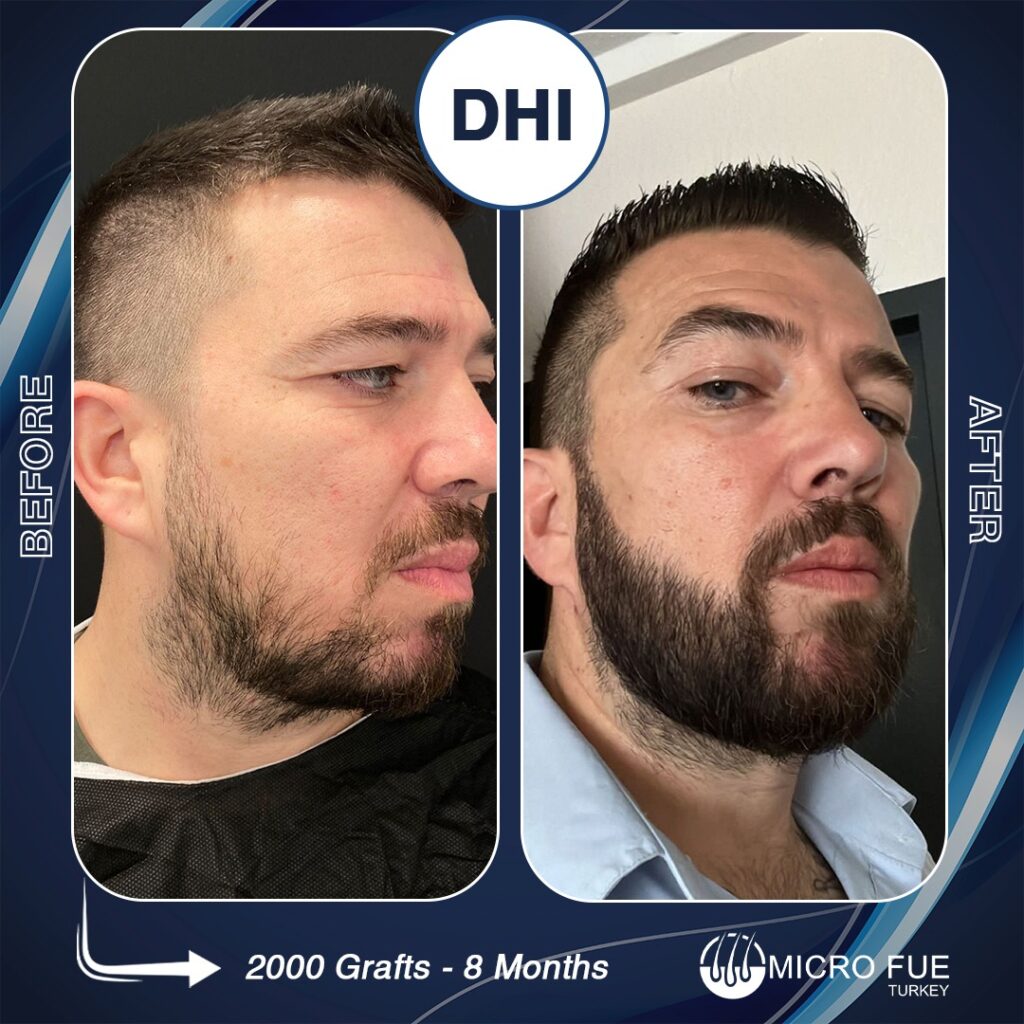
2. Can DHI Treat Beards or Eyebrows?
Yes! DHI’s precision makes it ideal for facial hair restoration.
3. Which Lasts Longer: FUE or DHI?
Both offer permanent results since they use your natural hair.
Conclusion
Choosing between FUE vs DHI hair transplant hinges on your hair loss stage, budget, and desired outcomes. While FUE is cost-effective and reliable, DHI offers unparalleled density and faster recovery. Schedule a consultation with a qualified specialist to determine your best path forward.
For more insights on hair restoration, check out our article on FUE Hair Transplant Success Stories.